
Cognitive Enhancement
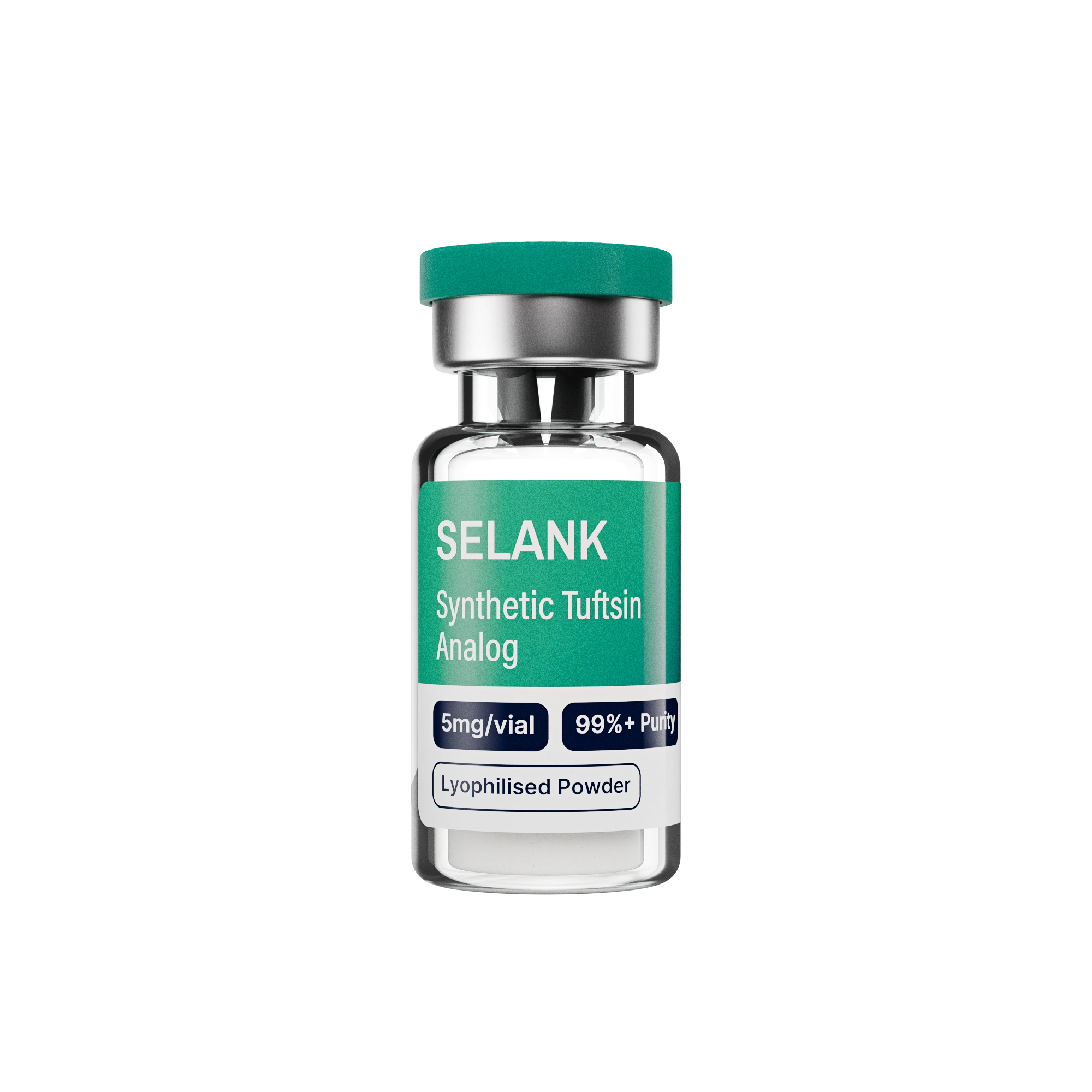
Selank
Anxiolytic neuropeptide for stress relief, mood stability, and calm focus.
Add to cart
If you're researching cognitive peptides, there's a good chance you're looking for evidence rather than promises. Semax and Selank have been investigated in relation to cognition, neuroplasticity, and stress regulation for decades. If you're planning to buy Semax in Europe, start with the data: purity testing, analytical reports, and documented sourcing.
The nootropic market includes a wide range of products, from racetams and adaptogens to herbal extracts and amino acid blends. Many of these compounds are studied for their effects on cognitive function.
For example, a 2009 Cochrane Review of Ginkgo biloba for cognitive impairment and dementia evaluated data from multiple clinical trials, while racetams such as piracetam have been investigated in studies of memory and cognitive performance. These compounds generally work indirectly by influencing neurotransmitter activity or providing compounds the brain uses in normal cellular processes.
Nootropic peptides are investigated using a different mechanism. Rather than primarily affecting neurotransmitter levels, they are studied for their interaction with:
These pathways play a role in how neural networks develop, adapt, and function over time.
A protein called Brain-Derived Neurotrophic Factor (BDNF) is essential for neuroplasticity, which is the brain’s capacity to build new connections, reinforce old ones, and adapt to new information. Improved memory formation, quicker learning, sharper attention, and more cognitive resilience under stress have all been previously associated with higher levels of BDNF.
Because of its central role in neuronal growth and adaptation, BDNF is often discussed alongside nootropic and cognitive-enhancement peptides, leading some researchers and consumers to refer to it informally as the “BDNF peptide.” Now, on the other side, neurodegeneration, cognitive decline, and depression are all associated with lower BDNF levels (Binder & Scharfman, 2004).
Nootropic peptides Semax and Selank have been studied for their effects on BDNF expression in animal models. In one study, intranasal Semax increased expression of both BDNF and TrkB (the primary receptor for BDNF) in the rat hippocampus, a brain region involved in learning and memory. Selank has also been shown to increase BDNF mRNA and protein levels in the rat hippocampus following intranasal administration.
This distinguishes peptide-based cognitive enhancement from supplement-based approaches: instead of focusing primarily on neurotransmitter activity, these peptides are being studied for their interaction with pathways involved in neuronal growth, adaptation, and maintenance
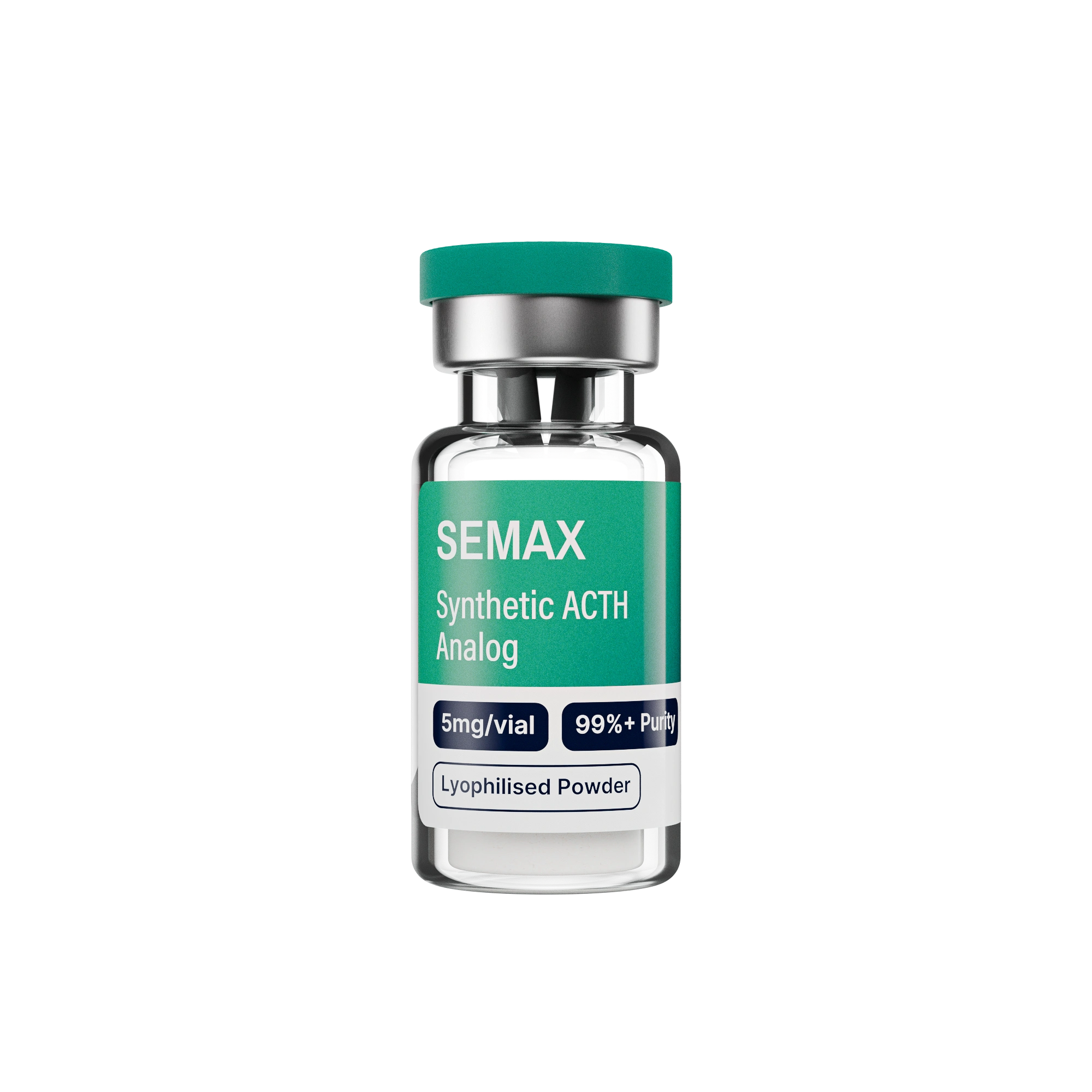
Developed in the 1980s at the Institute of Molecular Genetics of the Russian Academy of Sciences, Semax is a synthetic analogue of ACTH (adrenocorticotropic hormone) fragment 4-10. In Russia, it has been investigated in the context of neurological illnesses, stroke recovery, and cognitive problems since it was approved for clinical use in 1994.
Studies by Dolotov et al. (2006) and Kolomin et al. (2013) investigated Semax for its effects on several pathways involved in brain function, including:
Additional research has looked into Semax in connection to learning, information processing, working memory, and attention.
Selank is a synthetic analogue of tuftsin, a naturally occurring immunomodulatory peptide involved in immune signaling. It has been approved for clinical use in Russia since 2009 and has been studied in relation to anxiety, stress response, and cognitive function
Several neurological pathways have been studied in relation to Selank, including:
Studies in rodents have reported reduced anxiety-like behavior without changes in motor activity, suggesting that the observed effects were not driven by sedation. For example, Slominsky et al. (2017) found that Selank decreased anxiety in rats while leaving motor activity unchanged in an elevated maze test. As a result, Selank is frequently discussed in research examining cognitive performance under stress, mostly in situations where anxiety may impair attention and decision-making.
Semax and Selank are often discussed together because they have been studied for different but potentially complementary mechanisms. While research on Semax has focused on its potential effects on cognition, processing of information, and neurotrophic signaling, studies on Selank have examined its potential impacts on anxiety, stress response, and emotional regulation.
Both peptides are generally administered intranasally in research settings, which allows them to be studied without injection-based delivery. If you are unfamiliar with intranasal administration, see our How to Use guide for preparation and handling instructions. Both Semax for sale and Selank also share a long research history, with clinical use in Russia dating back to 1994 for the former and 2009 for the latter.
Both products are provided by MorphoPeptides with third-party testing, a Certificate of Analysis with batch-specific analytical data, and a purity level of at least 98%.