
Tanning & Pigmentation
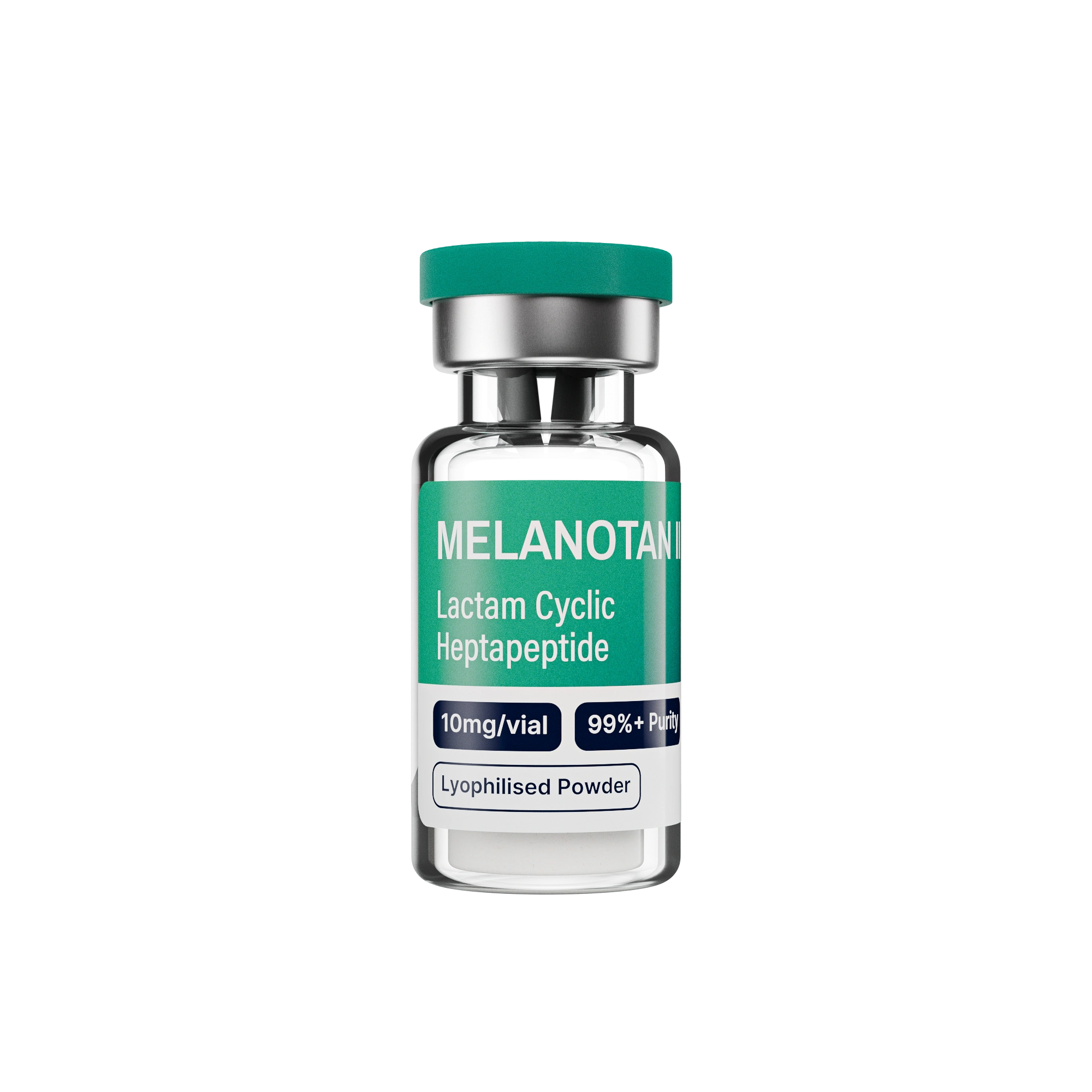
Melanotan II
Synthetic melanocortin peptide for enhanced skin pigmentation and UV protection.
Add to cart
Spending more time in the sun doesn't always lead to a deeper tan. For people with Fitzpatrick skin types I and II, melanin production often remains limited despite repeated UV exposure. If you're looking to research or buy Melanotan 2 Europe, understanding how MT-II interacts with the biological pathways associated with pigmentation is a useful place to start.
A tan is your skin’s natural reaction to UV exposure. When UV rays reach the epidermis (the outer layer of your skin), they stimulate melanocytes, which are the cells that produce melanin. Melanin is a pigment that absorbs some UV light and helps to protect deeper skin layers from DNA damage.
Unlike UV exposure alone, a tanning peptide is being researched for its capacity to affect the signaling pathways that control melanin formation. This is particularly relevant because individual pigmentation responses vary significantly from one person to another. Many individuals in northern Europe have Fitzpatrick skin types I and II (which burn quickly and tan slowly).
If you fall into this group, your melanocytes typically produce eumelanin at a slower rate. This can make tanning through sun exposure alone more difficult. As a consequence, you may burn before reaching the amount of tan that darker skin types may get more easily.
Designed to mimic the activity of alpha-melanocyte-stimulating hormone (a naturally occurring signalling hormone involved in regulating pigmentation), Melanotan II (MT-II) is a synthetic peptide that interacts with melanocortin receptors involved in skin pigmentation. It was created by University of Arizona researchers in the 1980s as part of a study into synthetic alpha-MSH analogues intended to boost the body’s natural pigmentary system.
The MT-2 peptide binds to melanocortin receptors (mainly MC1R) on melanocyte cells, prompting them to create eumelanin (the brown-black pigment responsible for skin darkening) without needing the same amount of UV radiation as would normally be required.
MT-II accelerates the biological process that happens spontaneously after light exposure. Melanocytes produce melanin in response to the peptide signal, which subsequently migrates to the top layers of the skin. A modest quantity of UV radiation (natural sunlight or regulated sunbed sessions) helps make pigmentation visible and distribute melanin more evenly throughout the skin.
If you reside in Germany, Scandinavia, the United Kingdom, or another northern European country, opportunities for natural sun exposure can be limited. For much of the year, the UV index is rather low, and many individuals in these populations have Fitzpatrick skin types I-III.
This combination provides a practical challenge: obtaining meaningful pigmentation often requires repeated sun exposure over a longer period. At the same time, UV radiation continues to be the principal cause of sunburn, photoaging (UV-provoked premature skin aging), and other types of skin damage.
Part of the interest in Melanotan II (MT-II) comes from its interaction with the biological processes that influence pigmentation. In practice, users often combine MT-II with minimal UV exposure from natural sunlight or regulated sunbed sessions to get visible pigmentation.
For many people in northern Europe, these challenges are what lead them to research or buy Melanotan Europe.
The Fitzpatrick scale divides skin into six groups depending on its baseline pigmentation and reaction to ultraviolet exposure:
This distinction matters because starting pigmentation levels can influence how noticeable changes are over time when using a tanning peptide.
Most Melanotan II (MT-II) protocols follow a two-phase approach:
If you’re new to peptide preparation, our How to Use guide covers reconstitution with bacteriostatic water, dose measurement using U-100 insulin syringes, subcutaneous injection technique, and storage requirements before and after reconstitution for the MT-2 peptide and other research peptides.