
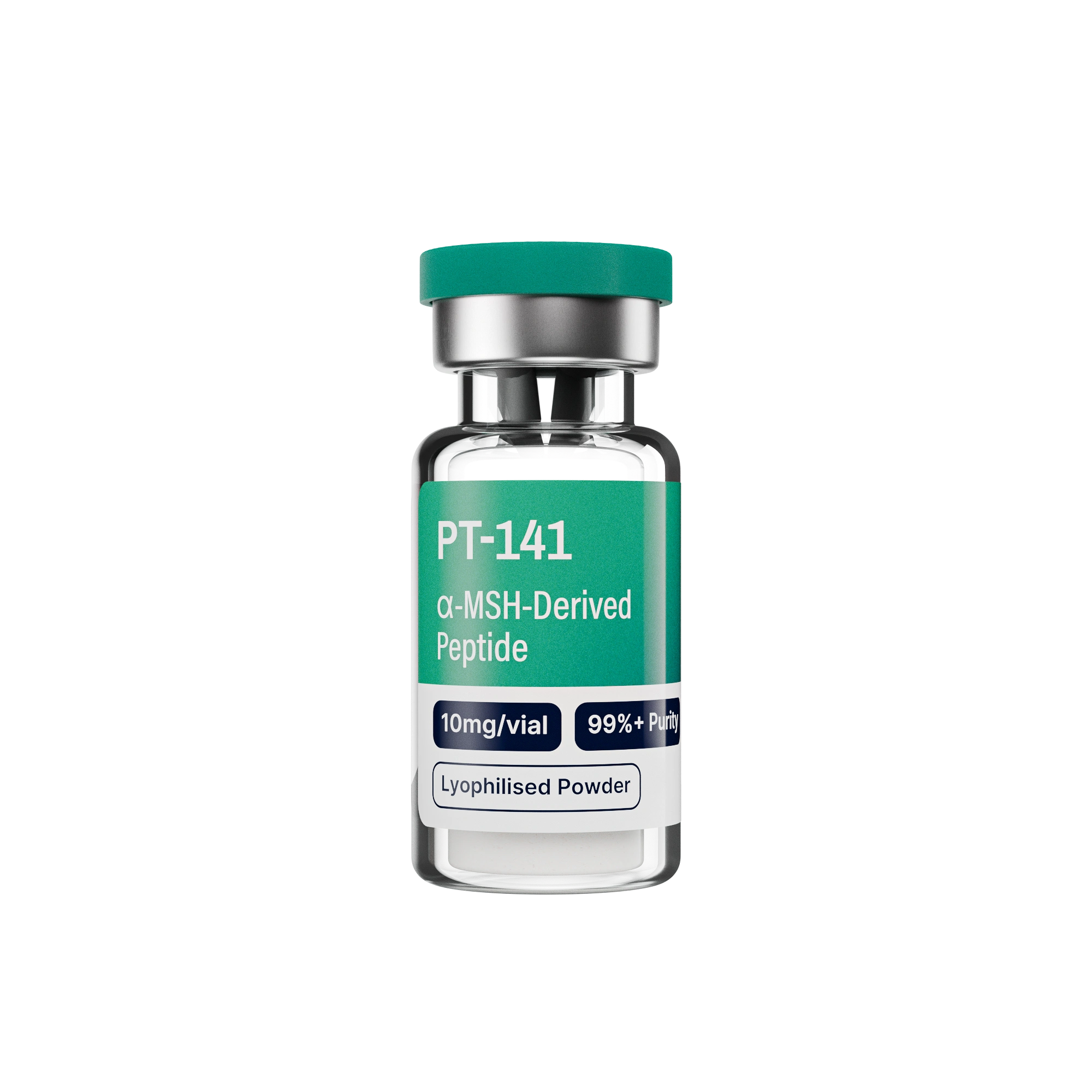
For more than 20 years, much of sexual-function research focused on vascular mechanisms. If you're planning to buy PT-141 Europe, understanding how this compound has been studied and reviewing the available clinical evidence is a useful place to start.
The role of blood vessels in sexual function has been the chief focus of study for over 20 years. PDE5 inhibitors such as sildenafil and tadalafil act by strengthening blood flow to the erectile tissue. Because their mechanism is vascular, they are designed to target blood-flow-related processes rather than the neural circuits involved in sexual desire.
By contrast, PT-141 (Bremelanotide) has attracted scientific interest because it works through a different mechanism. Unlike the vascular mechanisms discussed above, the PT-141 peptide acts on melanocortin receptors in the central nervous system (the brain and spinal cord). Here’s a quick comparison of the mechanisms studied:
| Compound Type | Principal Research Focus | Mechanism Studied |
| PDE5 inhibitors (e.g. sildenafil, tadalafil) | Vascular function | Increased blood flow to erectile tissue |
| PT-141 (Bremelanotide) | Neurological pathways involved in sexual function | Activation of melanocortin receptors in the central nervous system |
With those differences in mind, it’s worth taking a closer look at the mechanism that differentiates this compound from PDE5 inhibitors.
PT-141 is a synthetic analogue of alpha-MSH (alpha-melanocyte-stimulating hormone). It activates melanocortin receptors, primarily MC3R and MC4R, in the hypothalamus (a region of the brain involved in regulating sexual behavior, appetite, and hormone signaling). Among sexual health peptides, it’s studied as a compound that acts on central nervous system pathways rather than vascular pathways alone.
One feature that distinguishes this compound in the research literature is that it has been investigated in both male and female study populations. For example, Diamond et al. (2006) examined PT-141 in premenopausal women with sexual arousal disorder, while subsequent studies evaluated the compound in men with erectile dysfunction and related aspects of sexual function.
As a result, the research surrounding PT-141 extends beyond the predominantly male populations historically associated with PDE5 inhibitor studies.
In women, bremelanotide (marketed as Vyleesi) received FDA approval on 21 June 2019 for the treatment of acquired, generalized hypoactive sexual desire disorder (HSDD) in premenopausal women. The approval was supported by the Phase 3 RECONNECT studies, which reported statistically significant improvements in measures of sexual desire and reductions in distress associated with low sexual desire among premenopausal women with HSDD compared with placebo. These findings remain part of the published clinical evidence available to those researching bremelanotide for sale.
In men, PT-141 has been the subject of clinical and translational research for more than two decades. Early studies by Molinoff et al. (2003) and subsequent investigations by Diamond et al. (2004) examined its effects in men with erectile dysfunction, contributing to ongoing research into melanocortin receptor agonists and sexual function.
Research on bremelanotide did not end with FDA approval. Subsequent analyses have continued to evaluate patient outcomes, long-term safety, and real-world experiences across sexual-function research. In a 2021 RECONNECT follow-up study, 242 women completed quantitative surveys and 80 participated in qualitative interviews, with participants reporting increased sexual desire, physical arousal, and improvements in overall sexual experiences.
Interest in melanocortin receptor agonists has also continued within male sexual-function research. A 2020 review of emerging therapies for erectile dysfunction summarized bremelanotide studies in men, including findings in which 34% of participants reported improved outcomes compared with 9% in the placebo group. If you want more follow-up information concerning receptor research, PT-141 protocols, related clinical studies, and compounds such as kisspeptin, visit our Knowledge Hub for further reading.
This peptide is administered by subcutaneous injection (an injection into the fatty tissue beneath the skin), typically 45-60 minutes before anticipated sexual activity. Bremelanotide should be used as required, with no more than one dosage every 24 hours and no more than eight doses per month, according to official prescribing information. Among sexual health peptides, this administration profile differs from compounds intended for scheduled daily use. This allows researchers and clinicians to evaluate its effects within a defined dosing window.